re: תוכחה(LH6_5_9) it seems that the CC (in the שער הציון) argues on the Rema cited in this BMC. Even if it's only a "non material" situation - in principal how can he shoose to follow other Rishonim and ignore the Rema. Also, perhaps it's explaining the discrepancy betwen this BMC and the associated Mekor HaChaim (which implies that you're not obligated if it won't help) May 29, 2026
August 2nd, 2026 Aug 7, 2026
July 19th, 2026 re: LH6_7 Aug 7, 2026
July 5th, 2026 Aug 7, 2026
June 21st, 2026 Aug 7, 2026
June 7th, 2026 Aug 7, 2026
May 31st, 2026 Aug 7, 2026
May 24th, 2026 Aug 7, 2026
May 17th, 2026 Aug 7, 2026
May 10th, 2026 Aug 7, 2026
May 3rd, 2026 Aug 7, 2026
See also the חלקת בנימין who also asks this Q. Jun 11, 2026
Emotionally, "willfullness" is associated with stress as the person stubbornly tries to impose his will. Whereas, "willingness" is associated with peacefulness - accepting the process. Jun 3, 2026
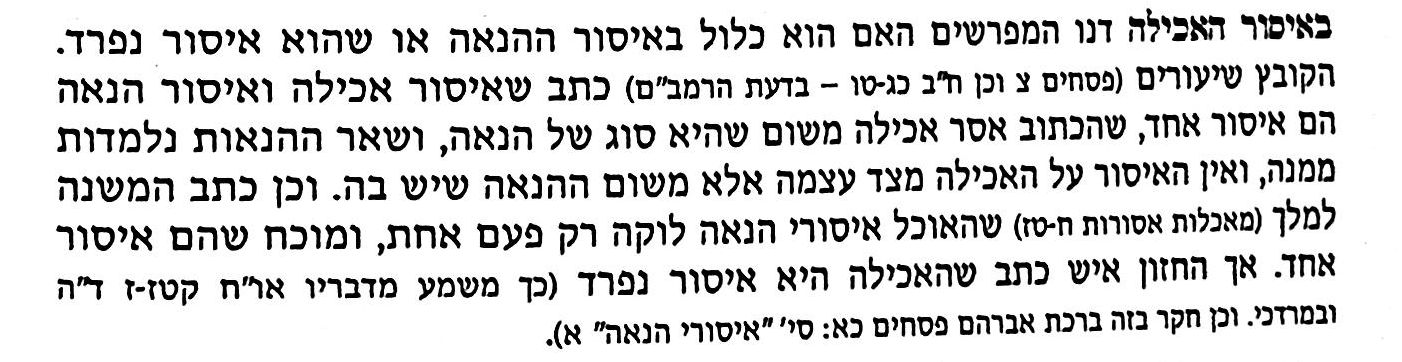
ספר קובץ יסודות וחקירות page 88
 May 12, 2026
May 12, 2026
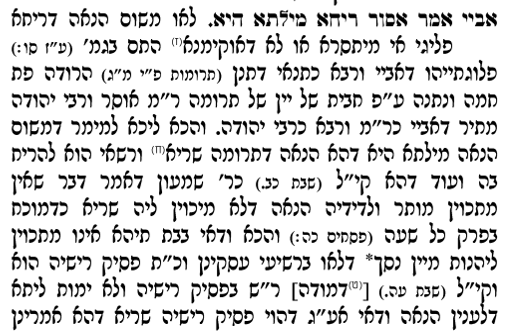
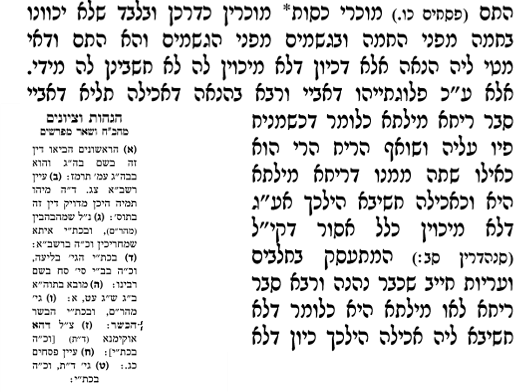
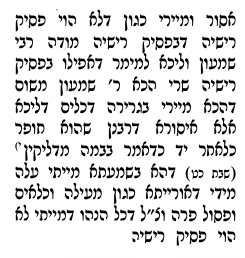
ר"ן Chullin בפרק גיד הנשה daf 32a (בדפי הרי"ף)
 Jun 11, 2026
Jun 11, 2026
 Jun 11, 2026
Cheklas Binyomin note 21 (LH6_5)
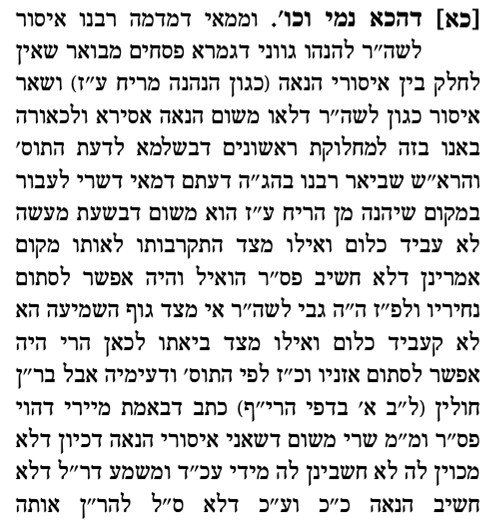
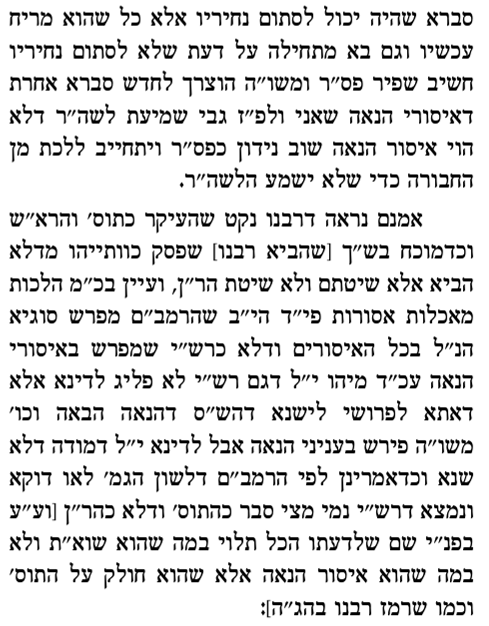 Jun 11, 2026
Jun 11, 2026
Q1 - both LH4_1_1 and LH6_5 describe non-תועלת situations where speaking/hearing גנות would be permitted (at least מדאורייתא). Why then, did the CC need to cite Pesachim 25b (הנאה הבאה לאדם בע"כ) and דבר שאינו מתכוין מותר לר"ש as the source of the היתר in LH6_5_14 but seemingly not for LH4_1_1? There, the CC explains that if there is no damage LH, then it's "מותר אם המספר לא התכוין לגנותו בזה". No source is cited for this. Likewise, throughout the sefer, רבינו states where it's permitted if the person is not מכוין לגנותו but never (to my knowledge) mentions Pesachim 25b or דבר שאינו מכוין מותר לר"ש or any source for this? Recall that in LH3_6_7, רבינו showed from the RambaM and RY that it's full LH אף אם לא יזיקו כלל מזה, w/RY describing it as "choosing לחייב ולהרשיע את חבירו ושמחתו לאידם". Perhaps it's understood from there that if they are not מכוין לגנותו that חלק החמור of LH wouldn't apply If so, why then did LH6_5 need a new source (Pesachim 25b) to permit שמיע בלא כוונה לגנותו?
A PM noted that in LH4_1_1 although it's not said לתועלת, neither the מספר or שומע are מכוין לגנותו. Whereas, in LH6_5 the person that the שומע is hearing the גנות from IS מכוין לגנות. His approach is that perhaps merely being a party to LH is also אסור מדאורייתא. We provided support for this approach from LH6_2_2 where one of the 3 sources that רבינו brings to show that שמיעה is אסור מדוארייתא is from the צוואת רבי אליעזר. Further noting that that source seems different from the ראיה ברורה brought there which רבינו describes as "אף לשמוע אסור שלא יבוא לידי האמנה בלב". Whereas, רבי אליעזר didn't seem to be describing a concern that it could lead to האמנה בלב, rather merely being a party to מספרי לשה"ר is enough to be written down למעלה with those others as אנשי רשע ובעלי לשה"ר. Seemingly w/o necessarily being מכוין לגנותו. Perhaps, that is a separate aspect of איסור שמיעת לשה"ר which applies even if not מכוין לגנותו, and thus requires the היתר of Pesachim 25b. Perhaps further support can be brought from LH6_6 in which the CC explains LH6_5 that if the May 29, 2026
A PM noted that in LH4_1_1 although it's not said לתועלת, neither the מספר or שומע are מכוין לגנותו. Whereas, in LH6_5 the person that the שומע is hearing the גנות from IS מכוין לגנות. His approach is that perhaps merely being a party to LH is also אסור מדאורייתא. We provided support for this approach from LH6_2_2 where one of the 3 sources that רבינו brings to show that שמיעה is אסור מדוארייתא is from the צוואת רבי אליעזר. Further noting that that source seems different from the ראיה ברורה brought there which רבינו describes as "אף לשמוע אסור שלא יבוא לידי האמנה בלב". Whereas, רבי אליעזר didn't seem to be describing a concern that it could lead to האמנה בלב, rather merely being a party to מספרי לשה"ר is enough to be written down למעלה with those others as אנשי רשע ובעלי לשה"ר. Seemingly w/o necessarily being מכוין לגנותו. Perhaps, that is a separate aspect of איסור שמיעת לשה"ר which applies even if not מכוין לגנותו, and thus requires the היתר of Pesachim 25b. Perhaps further support can be brought from LH6_6 in which the CC explains LH6_5 that if the May 29, 2026
It seems that דברים הניכרים refers to circumstantial evidence that supports the speakers report that the event actually took place. However, if it's possible that מעשה (even if it did occur) was actually permitted (or perhaps done unknowingly) one cannot accept the speaker's judgment that the נידון was guilty. i.e. if the מעשה is subject to judgment anyway, it's of course, insufficient reason to believe the גנות (that he did it באיסור). The CC's woring is that דברים הניכרים aren't שייך in such cases. We are certainly obligated to judge favorably in order to avoid causing embarrassment to the נידון in our eyes. Jul 24, 2026
The CC seems to be assuming that covering would prevent any hearing/seeing/smelling thus presenting an apparent contradiction with those מפורשים who imply that the person is in fact hearing/seeing/smelling. Later on the CC will consider that perhaps the חכמת אדם learns that the covering isn't guaranteed to prevent all hearing/seeing/smelling. The fact that the covering creates the possibility that there might not be any hearing/seeing/smelling removes the פסיק רישא. I.e. his presence isn't guaranteed to result in the prohibited hearing/seeing/smelling. Jun 26, 2026
Q - Why doesn't the מחבר himself include this היתר? Even in the בית יוסף he doesn't mention the היתר. Instead, he only teaches the basic איסור that the Gemara notes ("קול ומראה וריח אין בהם משום מעילה... הא איסורא איכא"). Which teaches that eventhough אין בהם ממש, they are still אסור. He doesn't mention the associated היתר where it's a הנאה הבאה לאדם בע"כ. Also note that the CC (end of BMC14) points out an apparent contradiction to this היתר of אפשר ולא מתכוין from Bava Basra 57b which calls someone a רשע if it's אפשר for them to take a different path, but take a path which passes women that are not dressed בצניעות - even though they are not מתכוין. Perhaps the מחבר and רמ"א argue in how to reconcile that סתירה.
Q - Why doesn't the טור include this הלכה (even re: the איסור), as the מחבר adds this in the שו"ע? Note - my print of the ש"ך references דברי משה אות ה, however, I in my print of the דרכי משה it is אות ב. Jun 10, 2026
Q - Why doesn't the טור include this הלכה (even re: the איסור), as the מחבר adds this in the שו"ע? Note - my print of the ש"ך references דברי משה אות ה, however, I in my print of the דרכי משה it is אות ב. Jun 10, 2026
This itself is a question as to why they would even debate something seemingly without an implication להלכה. May 29, 2026
Excerpt from קובץ שיעורים on Pesachim 25b
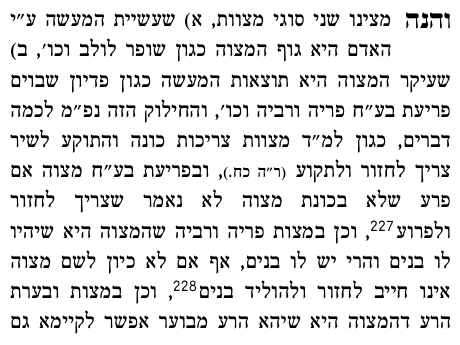
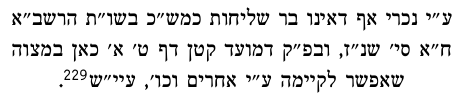
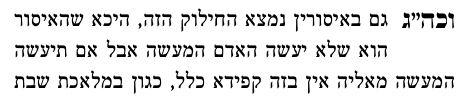
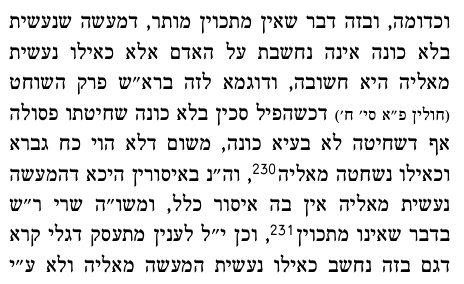
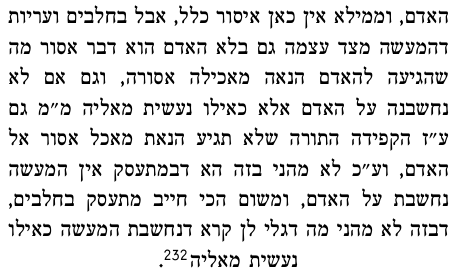 Jun 3, 2026
Jun 3, 2026
According to the רא"ש even if it's לא ניחא ליה (see CC there). Jun 10, 2026
As the RambaM states "כך וכך עשה פלוני וכך וכך היו אבותיו". (see הלכות דעות ז:ב) Jul 22, 2026
While discussing the מחלוקת regarding the היתר of הנאה הבאה לאדם בעל כרחו, the Gemara whether this requires that it's לא אפשר (the person can't simply leave the הנאה) and/or אינו מתכוין (the הנאה is not ניחא ליה). In addition, the Gemara points out that if neither is true (i.e. it's אפשר וקא מכוין) that all agree that the היתר doesn't apply. The ר"ן wonders why that case is even mentioned at all. If it's "אפשר" for the person to leave and they choose to stay and thus smell the ריח של ע"ז plus that הנאה is also ניחא ליה (i.e. קא מכוין) - in what way is it even considered "בעל כרחו"? The person is both choosing and pleased with his consuming that prohibited הנאה! Others explain that this case was simply brought אגב the others (completing all combinations re: אפשר and מכוין). However, the ר"ן answers that it's called "בעל כרחו" because "לא בא לכאן בשבילו אלא הריח ממילא קאתי". This introduces a new element. Based on this, the other 2 factors אפשר ומכוין are discussing the person's thought and choice at the time that he's smelling the ריח של ע"ז. Whereas, this is referring to his thoughts beforehand - at the time that the decision was made which led to him encountering that הנאה האסורה. Thus there is the preparatory "הכנה" stage, and the actual שעת איסור stage where he's actually consuming the הנאה בפועל. Jun 3, 2026
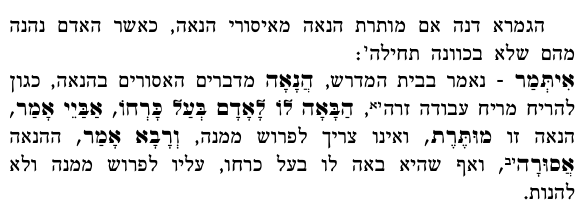 May 11, 2026
ספר קובץ יסודות וחקירות page 238-9
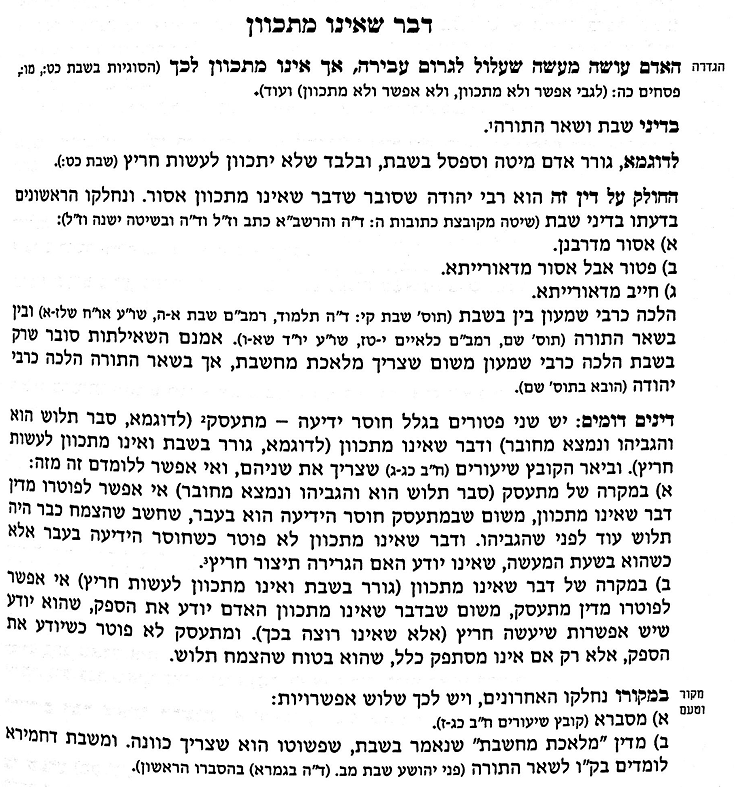

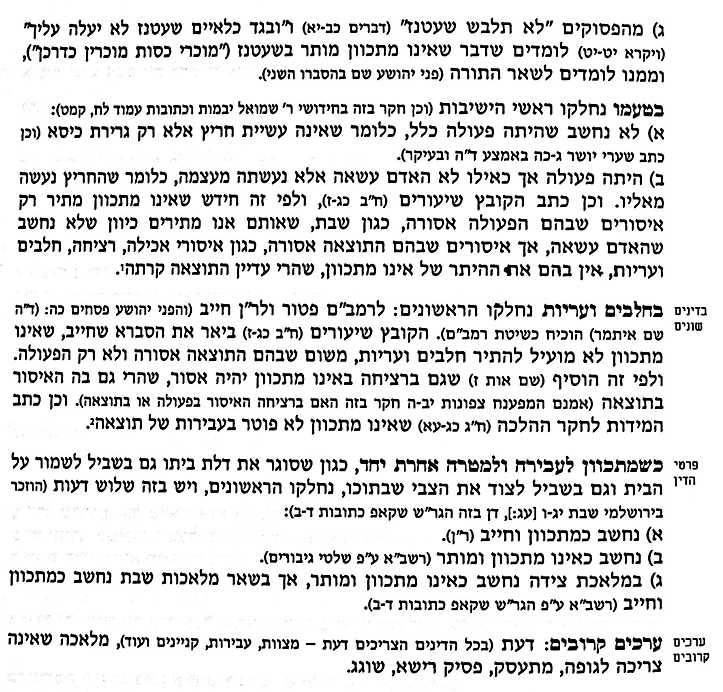
 May 12, 2026
May 12, 2026
Alternatively, this could be understood as a debate as to what constitutes "בעל כרחו" - the אפשרות vs. his כוונה. I've use dthe explanation as it seems from the ר"ן as that is who the CC seems to be following. Jun 3, 2026
This implies that despite the difference in years, (and even that the רא"ש (a ראשון) states it explicitly) one cannot poskin according to something that one sees as nonsensical ("מה שייך לאמר ... שיכול להאטים אזניו ... כיון ... השתא מיהא ששומע ... ולא מצינו כיוצא בזה בגמרא"). Jun 26, 2026
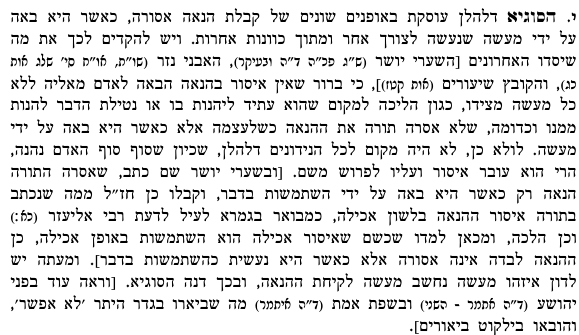 May 11, 2026
The RambaM includes LH in the איסור רכילות (see הלכות דעות ז:ב) (according to the CC it the RambaM derives it from רכילות via a קל וחומר). This is מצוה לא תעשה שא (301). Whereas, the איסור קבלת לשה"ר is included in לא תשא שמע שוא (mitzvah 281). Although סיפור לשה"ר is also included in לא תשא שמע שוא, it doesn't necessarily mean that what even is LH to say is also LH to believe. Jul 22, 2026
קצת קשה as to why רבינו doesn't add a similar qualification here Jul 24, 2026
This is distinct from the general exemption of אונס רחמנא פטריה. See here for an explanation of the distinction. Jun 3, 2026
I didn't want to explain that the sugya is trying to bifurcate "willing" acts into those that are considered בעל כרחו and those that are not. The reason being that the ר"ן explains that even cases where it's אפשר for the person to simply leave the place of the ע"ז smell - yet he chooses to stay and thus smell it, AND (now that he's encountered the ריח של ע"ז) he is also מתכוין for it (i.e. enjoys it) - nonetheless it's still considered by the Gemara as one of the cases of "בעל כרחו". Moreso, he was aware when he made the choice to take that road, that he'd encounter the ריח של ע"ז. The ר"ן learns that simply because his choice to take that road was not as a means to get to smell the ריח של ע"ז is enough to consider it בעל כרחו. Thus it seems that any "willing" act is considered בעל כרחו. However, according to those that explain that the Gemara didn't mean to include this case as בעל כרחו, but was included for a different reason (e.g. דרך אגב) thus בעל כרחו could be understood in a more literal sense. Likewise, the sugya could be trying to determine what is considered בעל כרחו. Jun 3, 2026
Note that תוס' only mentions that the Gemara is referring to a case which is not פסיק רישא. This משמעות is that תוס' is making an אוקימתא. However, according to the CC, תוס' is not referring to a case where the person has their nose plugged (as the חכמת אדם learns). As such, צ"ע how the case would not be a פסיק רישא. Perhaps, this is why the CC understands it to mean that inherently פסיק רישא doesn't apply b/c there is no מעשה. Jun 10, 2026
re: הנאה הבאה לאדם בע"כ (Pesachim 25b) Rashi defines אינו מתכוין as not מכוין להינות, similarly that it's not חביב to him. Whereas, re: Shabbos it is defined as the person's intent when he did the action (e.g. dragged the bench) whether it was done in order to produce the outcome (e.g. create חריצים in the ground). Note - the מפרשים point out an apparent contradiction in Rashi (Pesachim 2b) where he also states "וקא מכוין להתקרב כדי להנות ... וחביב הוא לו להינות". However, we already explained that is not referring to past intention behind an (unstated) action done to draw close to it, but rather to his state of mind where it's so חביב to him that he wants to be close" Jun 11, 2026
For example, instead of stating "ומיהו דבר שאין מתכוין מותר", why didn't he state "ומיהו אם באה לו בע"כ מותר"? Jun 11, 2026
Perhaps the same is true of "אפשר" - that it has 2 levels. If the ר"ן agrees with Tos, that אפשר means that it's possible to leave without טירחא גדולה, then it would include a slight element of בעל כרחו. Within "אפשר", there is still reasonable טירחא involved to leave. וצ"ע Jun 10, 2026
ספר קובץ יסודות חקירות prev. edition page 147-148
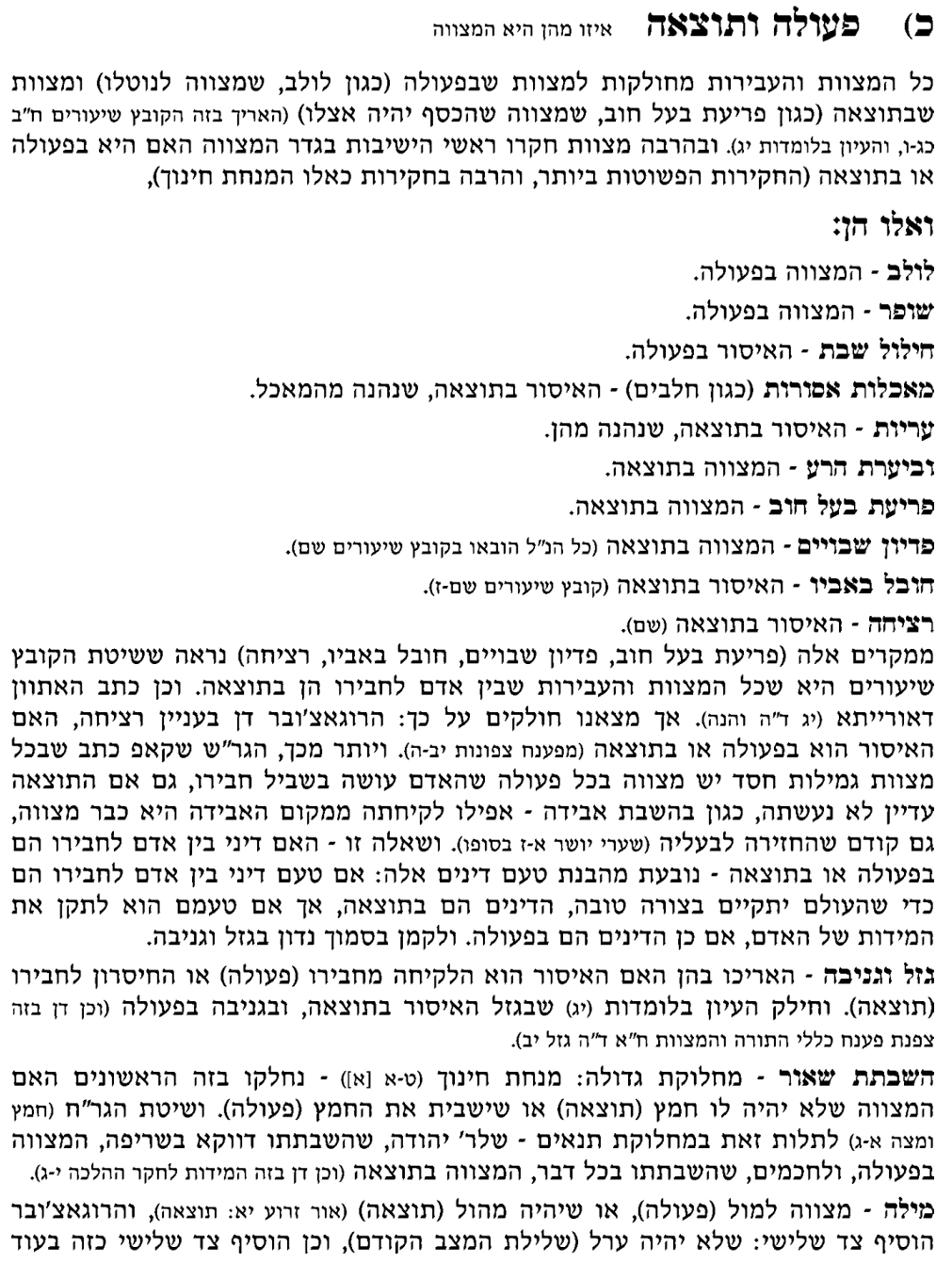
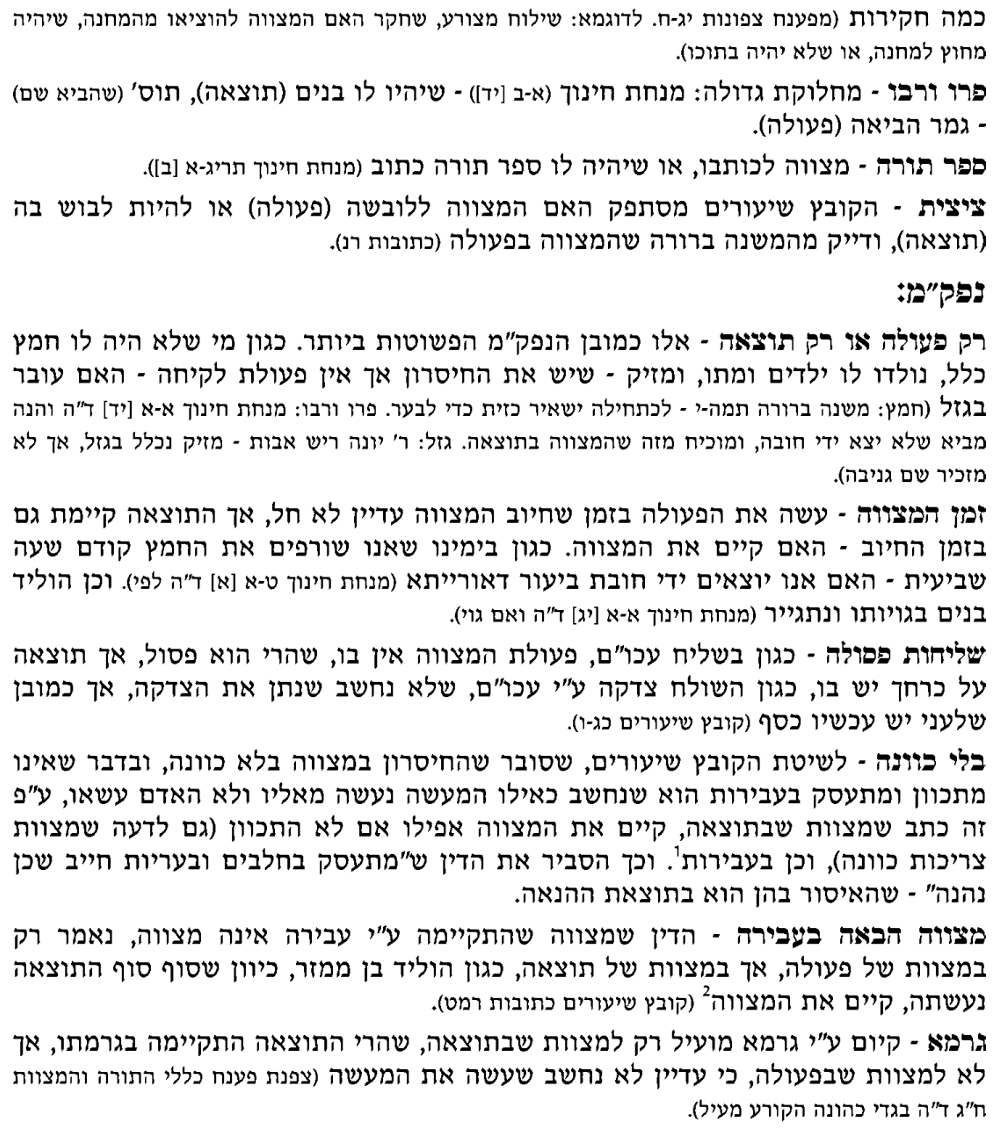 May 12, 2026
May 12, 2026
דבר שאינו מתכוין is used throughout Shas in other sugyas and is not lmiited to hilchos Shabbos. Jun 3, 2026
The example for a דבר גנות used throughout the sefer is that "Ploni did an עבירה". e.g. "Ploni ate an עבר מן החי". However, that statement has 2 aspects to it. There's the act of eating a limb from a live animal, and then there's the having violated איסור עבר הן החי. As we see from Yosef's LH about the שבטים, even such an apparently obvious case can have possible justifications whereby it was in fact been permitted. For a more common example, the reported עובדא may be that someone did מלאכה on Shabbos, however he may have done so due to פיקוח נפש. Jul 22, 2026
Although our גירסא of the Gemara states that קול ומראה וריח is אסור, the מחבר cites רבינו ירוחם who leaves out ריח. That would explain why the מחבר leaves out it out of this halachah in the שו"ע. Likewise, the ריא"ז that the דרכי משה quotes also only mentions קול ומראה. It would seem that they had a different גירסא in the Gemara. However, Rashi and other ראשונים who came before them does have ריח in his גירסא (see 26b ד"ה וריח). Likewise, they illustrate the Gemara there re: הנאה הבאה לאדם בע"כ with an example of ריח. Jun 11, 2026
Unlike the ר"ן, Rashi doesn't mention any separate requirement of בעל כרחו or mention of what the person's intention was behind actions which led him to be confronted with the איסור being forced upon him. Jun 11, 2026
This is according to the ר"ן who considers בעל כרחו to be a separate factor. לולי דבריו, perhaps the מסקנת הסוגיא is that אינו מתכוין is considered בעל כרחו (and permitted). See further as to why we don't simply apply דבר שאינו מתכוין מותר לר"ש. May 29, 2026
The CC will later go on to explain what he holds that ש"ך was actually saying. Jun 26, 2026
Perhaps this is further proof to what we said above. That the בעניננו, the key factor of that which is אסור משום הנאה is that it doesn't require a מעשה איסור, and prohibits even if the person is fully passive/inactive. That is the basis of comparison and application of the היתר of הנאה הבאה לאדם בע"כ to LH. Similar to how רבא brings proofs cases which are also לאו משום הנאה. Jun 10, 2026
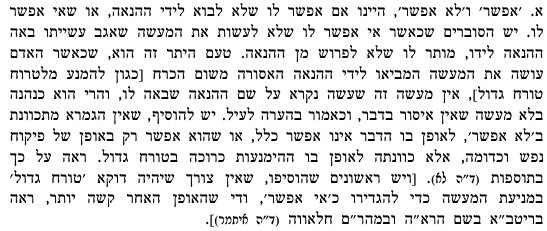 May 11, 2026
Darchei Moshe YD 142:15
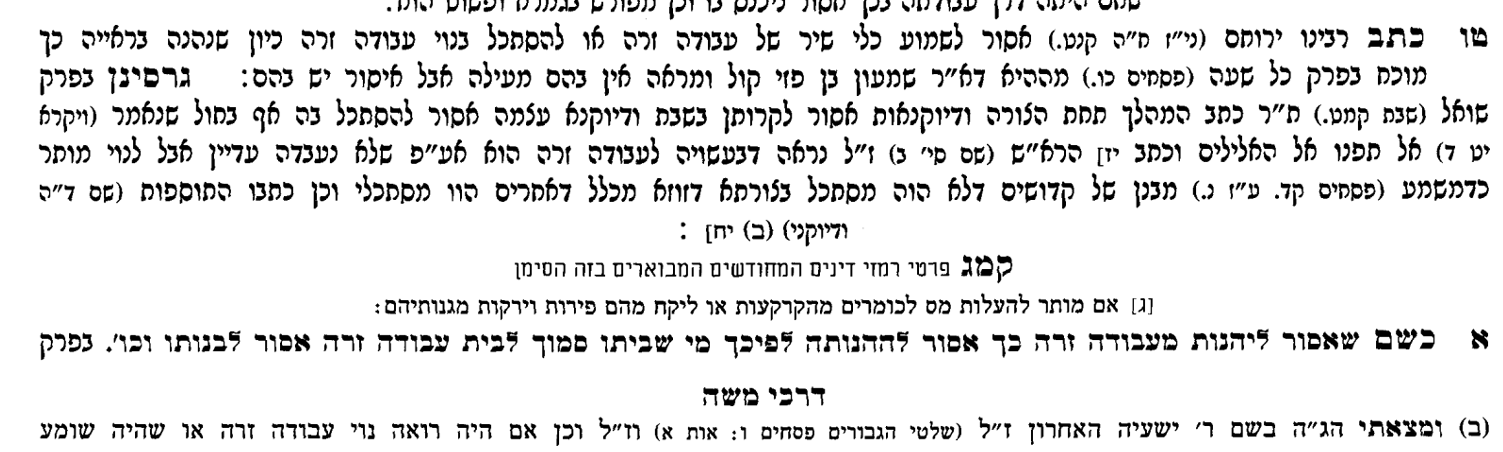
 Jun 19, 2026
Jun 19, 2026
It's such a straight forward application of Pesachim 25b, that the ש"ך wonders why the Rema (in דרכי משה) needed to cite the ריא"ז (רבינו ירוחם) as the source. Jun 11, 2026
Of course, if covering of the ears would prevent the person from hearing the דבר האסור, there would be no איסור to speak of. Rather, the covering of the ears merely makes it possible that he might not hear it - thus removing the פסיק רישא. Jun 26, 2026
In a case where the speaker doesn't view it as a גנות, the מספר is still responsible for how the מקבל will view it, and also how the נידון views it (see LH4_1_1). Jul 22, 2026
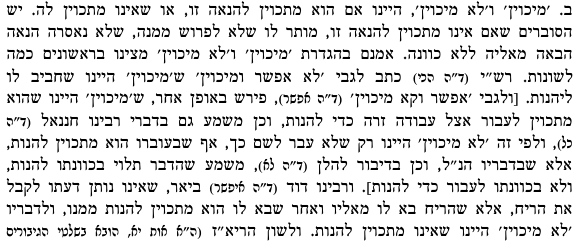
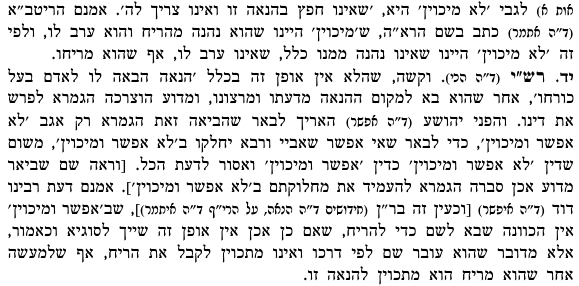 May 11, 2026
The רא"ש doesn't discuss what the person's intention were at the (prior) time that he chose to take the road which led him to the ריח של ע"ז. Thus, difficult to say that when he mentions the possibility of plugging the nose that he's referring to that שעת הליכה.
Q - Why didn't the CC, merely cite this רא"ש without need to discuss being מצרף the שעת הליכה to the actal איסור?
A - Perhaps, this is b/c he does bring down the ר"ן להלכה, and thus has to include that time period. This makes the fact that רבינו did include the ר"ן (and his additional requirement re: that prior time) into this halachah more noteworthy as it added this complication. The CC deals with both periods. Unlike the רא"ש, he learns that the שעת איסור would be considered a פסיק רישא (as למעשה, the person is not plugging his nose/ears), however learns (חידוש?) that categorically, פסיק רישא doesn't apply when the person is not doing a מעשה (i.e. passive). It's only regarding the מעשה of the walking to דבר האסור in which the CC uses the fact that once the person arrives, he does have the possibility to plug his nose. He uses this to disconnect the מעשה of the הליכה from the passive איסור. i.e. this is a modified application of the רא"ש. Jun 11, 2026
Q - Why didn't the CC, merely cite this רא"ש without need to discuss being מצרף the שעת הליכה to the actal איסור?
A - Perhaps, this is b/c he does bring down the ר"ן להלכה, and thus has to include that time period. This makes the fact that רבינו did include the ר"ן (and his additional requirement re: that prior time) into this halachah more noteworthy as it added this complication. The CC deals with both periods. Unlike the רא"ש, he learns that the שעת איסור would be considered a פסיק רישא (as למעשה, the person is not plugging his nose/ears), however learns (חידוש?) that categorically, פסיק רישא doesn't apply when the person is not doing a מעשה (i.e. passive). It's only regarding the מעשה of the walking to דבר האסור in which the CC uses the fact that once the person arrives, he does have the possibility to plug his nose. He uses this to disconnect the מעשה of the הליכה from the passive איסור. i.e. this is a modified application of the רא"ש. Jun 11, 2026
Regarding אפשר, Rashi explains it to mean the possibility to leave "אפשר לו ליבדל ולא נבדל". This seems to refer to the person's options בשעת איסור, while in the presence of the actual ריח של ע"ז and not what his options were previoulsy that let to this encounter. Likewise, regarding כוונה, Rashi explains it to mean "קא מכוין ליהנות ... וחביב הוא לו ליהנות". This seems to be referring to how he views the הנאה itself. Rashi, never mentions anything about the decisions made that led to him being confronted with this הנאה. The only possible exception, is that Rashi also explains there "וקא מכוין להתקרב כדי ליהנות". The מפרשים point to this as an apparent contradiction in Rashi. The full text of Rashi is אפשר לו ליבדל וקא מיכוין להתקרב כדי ליהנות כגון ריח של ע"ז או אפי' א"א לו ליבדל ומיהו מתכוין הוא וחביב הוא לו ליהנות". Since, "אפשר לו ליבדל" is referring to the time he's actual in the presence of the ריח של ע"ז, the next statement regarding כוונה would seem to be the same. Moreso, gramatically "וקא מכוין להתקרב" is not referring to the past either??? . Further, in the next piece (ד"ה לא אפשר) Rashi doesn't mention כוונה להתקרב only "ולא קא מיכוין ליהנות". Perhaps Rashi is referring to the person's intention while he's in the presence of and actually smelling the ריח של ע"ז. Just as he described that the ריח is "חביב" to the person, in the that same context, Rashi explains that the person intends to draw close to enjoy it. i.e. it's his desire to do so, b/c it's חביב to him. Essentially, Rashi is explaining what the Gemara later describe מכוין as "ניחא ליה". Likewise this is how the CC states the requirement in LH6_5 (after citing Rashi in BMC14). Jun 10, 2026
As such, it's מסתברא that the Torah is not specficially prohibiting the doing of an action which puts one in position to hear. Jun 11, 2026
Note that the רמ"א doesn't mention anything about פסיק רישא or the need to cover ones eyes or ears. Jun 26, 2026
Perhaps, the ר"ן held that פסיק רישא is based on the situation as it is (whether that is מוכרח to result in the איסור), and doesn't factor in theoreticals as the רא"ש does. Also see חכמת אדם (brought by the CC in the הגה"ה). Jun 11, 2026
רבינו חננאל Pesachim 25b -
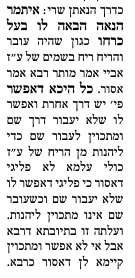 May 11, 2026
May 11, 2026
For example, in שואל's case - he believed Doeg that אחימלך did provide aid to דוד. However, he held back at that point from believing the (implied) negative judgment of guilt (aiding a rebellion). Perhaps, this suspends the איסור קבלת לשה"ר until such time that he views it as a דבר גנות (guilt). i.e. Perhaps קבלת לשה"ר is believing a סיפור של העובדא if it results שיתבזה בעיניו על ידי זה. Shaul's case would only teach that this includes where the בזיון בעיניו came later. Jul 22, 2026
We also see from "וגם עתה" that רבינו also understands Rashi's explanation of אינו מתכוין as dealing with the שעת איסור (at the time that he's in the בע"כ predicament and actually hearing the LH). Jun 11, 2026
He doesn't seem to be understand this as prohibiting one from "willfully" putting himself in that position. Further, he seems to prohibit if the person was even aware that this would happen. וצ"ע in how he derives that from the ר"ן. Jun 10, 2026
The stated case in the מקור החיים is "אפי אם יודע שהדברים שספר לו הוא אמת". This implies that the עובדא was already known to the מספר. Moreso, if not knowing of the עובדא w/o the מספר was required, you'd expect some mention of that or some mention about finding out after the סיפור that the דברים were true. The only condition mentioned is that the מקבל violated בצדק תשפוט. Jul 22, 2026
רבינו holds this to be true, even if the person doesn't actually intend to plug them up. See discussion in the הגה"ה there re: his Q on the חכמת אדם. Jun 11, 2026
Tos (and others) bring the Q of פסיק רישא. Jun 26, 2026
On the topic of whether ריחא מילתא היא, the רי"ף brings down a מחלוקת אביי ורבא כרםצ (Avodah Zarah 66b) re: smelling a cap from a jug of יין נסך. The ר"ן doesn't learn that they are simply arguing whether the הנאה of the ריח would be prohibited. One reason given is b/c Pesachim 25b would permit it due to the fact that he's not מכוין for the הנאה. He addresses the possible Q that מודה ר"ש בפסיק רישא. To this he answers: "לענין הנאה ודאי אע"ג דהוי פסיק רישיה שריא דהא אמרינן התם (פסחים כו.) מוכרי כסות מוכרין כדרכן ובלבד שלא יכוונו ... והא התם ודאי מטי ליה הנאה אלא דכוין דלא מיכוין לה לא חשבינן לה מידי" Jun 11, 2026
ריטב"א Pesachim 25b -

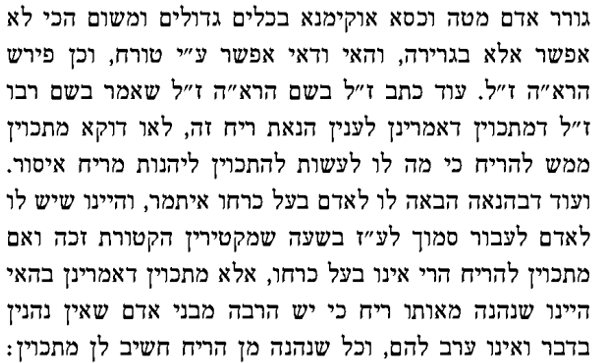 May 11, 2026
May 11, 2026
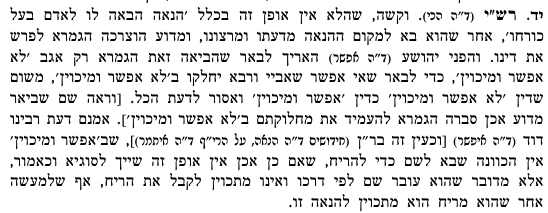 May 11, 2026
רבינו is discussing LH and stating that there is no מעשה for the איסור of שמיעת לשה"ר. Likewise, the same would seem to be true regarding smelling ע"ז, etc. Jun 11, 2026
The חלקת בנימין also states that the ר"ן's approach (ignoring פסיק רישא in cases where it's אסור משום הנאה) would not apply to LH (דלא משום הנאה אסירא). However, the answer that we gave before to explain how the CC could apply the היתר of הנאה הבאה לאדם בע"כ to LH (which is לאו משום הנאה אסירא) woudl apply equally to this question. Namely, that the CC understood the Gemara itself as not specific to הנאה per se, but rather to איסורים which prohibit the outcome (e.g. הנאה) itself even if the person is totally passive. Likewise, the ר"ן's point that פסיק רישא wouldn't apply in such cases would be for the same reason. This is also perhaps what the CC means when he states that פסיק רישא doesn't apply to such cases b/c there is no מעשה. i.e. פסיק רישא (inevitability) is a דין in cause (e.g. מעשה של האדם) and effect (prohibited outcome). דבר שאינו מתכוין disconnects the person's מעשה from that outcome (as he didn't intend it). However, if causally speaking his action is מוכרח to result in that outcome, they must be connected. (As such, the only subsequent discussion revolves around whether that outcome is ניחא ליה. Similar to how passive איסורים which prohibit the outcome לעצמה, also focused on whether it's ניחא ליה). Jun 11, 2026
Perhaps this is the intention of the ר"ן who describes "אלא הנאת הריח ממילא אתיא". Also, further in the Gemara (26b) רבא brings a proof from עגלה ערופה in which the discussion is whethere "אפילו ממילא נמי". Jun 11, 2026
Note that there are 2 (or 3) prevalent understandings of מודה ר"ש בפסיק רישא (taken from ספר קובץ יסודות הש"ס). One is that (since the outcome (איסור) is inevitable) הוי כמתכוין (in line with what the CC explains here that "כאילו עשה מעשה בכוונה"). Within this "הוי כמכוין" approach there are 2 approaches on what halachic mechanism converts his actual lack of intention into halachic intention. Some learn it's an אנן סהדי (as it seems from Tos, Rosh). Others learn that הכוונה למעשה "מוגדרת" ככוונה גם לתוצאה. OR - a separate understanding of פסיק רישא (other than הוי כמכוין) is that in such cases (of inevitability) we don't need כוונה. The sefer also says "ויל"ד ע"פ הצדדים אלו במה שחידשו הפנ"י והח"ח דכל האיסור בפסי"ר היינו דוקא כשע"י מעשיו נעשה האיסור, אך כשהאיסור נעשה בשב ואל תעשה מותר ודו"ק". However, see our prev. discussion that פסיק רישא (causal inevitability) is a matter of cause/effect (i.e. causation) and thus not שייך where there is not action (מעשה) being done. That would seem consistent with the 1st approach in פסיק רישא mentioned here.
The פנ"י explains that "הוי כתכוין דהוי ליה לאסוקי אדעתא מעיקרא". According to that, we're not presuming that he did intend it to happen. Rather, we're accepting that he didn't, but halachically judging him as if he was מכוין for the איסור b/c he should have thought that his action would result in the איסור (and refrained from doing the act). This would seem consistent with the approach mentioned above that מוגדרן ככוונה להתוצאה. Jul 3, 2026
The פנ"י explains that "הוי כתכוין דהוי ליה לאסוקי אדעתא מעיקרא". According to that, we're not presuming that he did intend it to happen. Rather, we're accepting that he didn't, but halachically judging him as if he was מכוין for the איסור b/c he should have thought that his action would result in the איסור (and refrained from doing the act). This would seem consistent with the approach mentioned above that מוגדרן ככוונה להתוצאה. Jul 3, 2026
I don't think that the CC means that we view it as if the person did a מעשה, but rather that his passive act הוי כמכוין. Jun 26, 2026
We did consider that perhaps the ר"ן didn't mean this to be a separate condition at all. Rather, he was only answering the Q as to how the Gemara could even consider the case of אפשר וקא מכוין as being בע"כ. To this, the ר"ן explains that (perhaps) the lack of intention at that prior stage is enough to include this for consideration as בע"כ. However, since the Gemara concludes that according to all it's אסור, we don't consider that להלכה. However, we dropped this b/c (a) the ר"ן's wording doesn't mention anything to the effect of הו"א ומסקנא or לפי צד זה י"ל דבע"כ היינו וכוליה( b) moreso, his comment and definiton of בע"כ is stated in reference to the Gemara's first line which is discussing the topic in general, and not merely according to one of the cases. Jun 11, 2026
Based solely on his הגה"ה to the שו"ע, it would possible to learn that the רמ"א includes כוונה at both stages when he said ומיהו אם אינו מכוין מותר. However, in the דרכי משה, it would seem more דוחק to fit that in as he is discussing a case where "שהיה רואה ... שאינו חפץ בהנאה זו". This is משמע that he is already seeing or hearing the דבר האסור, and not referring to any previous planning/הכנה. Jun 11, 2026
See פנ"י who discusses re: אסתר and cases of שבויה that תחילתה באונס. Jun 26, 2026